
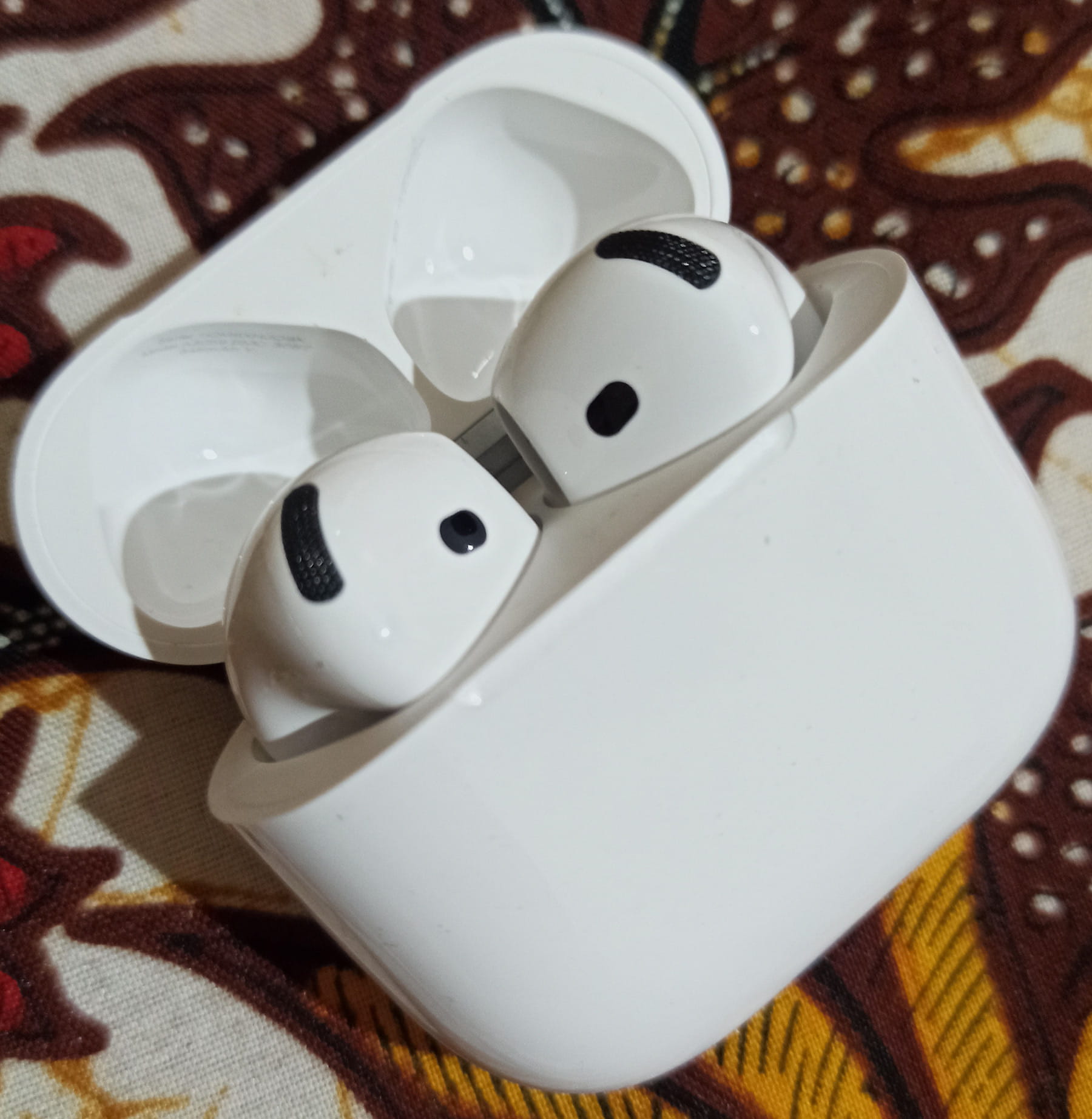
The Cupertino giant plans to integrate optical sensors into its popular earbuds, but the shadow of surveillance and corporate panic threatens to turn the release into a legal and ethical minefield.
Although the wearable technology ecosystem has grown exponentially over the past decade, few products have generated as much anticipatory unease as the future camera-equipped AirPods that Apple is reportedly developing. According to leaks and rumors gathered by specialized media, the California-based company is working on an evolution of its iconic earbuds that would incorporate low-resolution visual sensors—designed not to capture snapshots or video, but to feed its proprietary artificial intelligence system, Apple Intelligence.
However, the announcement—initially expected at this year’s fall event—could be delayed until 2026, according to sources close to the project cited by Bloomberg journalist Mark Gurman. The reason for the postponement would not be the growing privacy criticism, but rather supply chain constraints and software adjustments. But the reputational damage is already done: across digital forums, professional networks, and tech communities, the debate has polarized around a recurring fear: are we witnessing another step toward the surveillance society?
A Breeding Ground for Distrust
The uproar is not without precedent. The tech sector’s recent memory is marked by the scandal surrounding Meta’s Ray-Ban smart glasses, which were dubbed “pervert glasses” in some circles after it was revealed they recorded bystanders without consent. Cases like that of British comedian Diane Morgan—known for her character Philomena Cunk—who was filmed without permission, fueled the perception that these devices are tools of intrusion.
These fears now transfer to the camera-equipped AirPods. On platforms like Reddit and LinkedIn, users have voiced concerns ranging from the practical to the legal. One commenter noted that gyms already ban phones in locker rooms, but with these earbuds it would be impossible to tell who is wearing a camera and who is not—forcing a blanket prohibition. Others warned of a “legal nightmare” within companies: if an employee captures images of clients or sensitive documents and these are transmitted to external servers, it could breach non-disclosure agreements or data protection clauses.
Even more extreme scenarios were raised, such as workers using the device in restrooms or other sensitive areas, exposing employers to liability lawsuits. The conclusion among many critics is stark: the mere possibility of recording—even if the manufacturer insists that is not its primary function—makes these wearables an unmanageable risk for many organizations.
Apple’s Privacy Pledge (and Its Limits)
Sources close to Apple’s strategy insist that the company has learned from others’ mistakes. Unlike Meta’s glasses, whose images were reviewed by external staff in Kenya—including intimate user situations—the camera AirPods would be designed to process visual information locally, on the user’s own phone, through encryption and anonymization. The sensor resolution would be deliberately low, both due to battery constraints and as a deterrent: they would lack the quality to capture sharp images that could be used for surveillance purposes.
Apple has traditionally been cautious with artificial intelligence, precisely because of its historical commitment to privacy—a stance that has drawn criticism for lagging behind Google or Microsoft in the generative AI race. But this time, even that reputation may not be enough. As one analyst consulted put it, “the problem is not how the device actually works, but how society perceives it. A camera on the ear, however harmless its design, triggers alarms that engineering cannot disable.”
A Regulatory Void That Urgently Needs Filling
Beyond the noise on social media, the debate exposes a structural gap within organizations: most companies lack clear policies on the use of wearables with image- or sound-capturing capabilities. While mobile phones have established protocols—banned in boardrooms with classified information or in locker rooms—camera-equipped earbuds represent a gray area.
Compliance experts recommend that companies do not wait for the official launch to update their conduct handbooks. It is necessary to define which devices are permitted, in which spaces, and under what conditions, as well as to inform staff that even seemingly innocuous gadgets may be sending data to third-party AI providers—potentially leaking sensitive intellectual property or strategic information.
For now, Apple remains officially silent on the project, but the noise generated serves as a warning: in the era of ubiquitous AI, the most advanced technology must not only be intelligent, but also socially acceptable. And on that front, the battle has yet to be won.
ForAllTechNews
Image credit: Wikimedia Commons / CC0 1.0 Universal