
Focusing on the Essentials
These glasses stand out for their simplicity, avoiding unnecessary features that could overwhelm users. Their approach is reminiscent of the revamped Pebble smartwatch, which prioritizes basic notifications without complications. The G1 essentially acts as a secondary screen for your smartphone, displaying useful information without distractions.
Design and Hardware
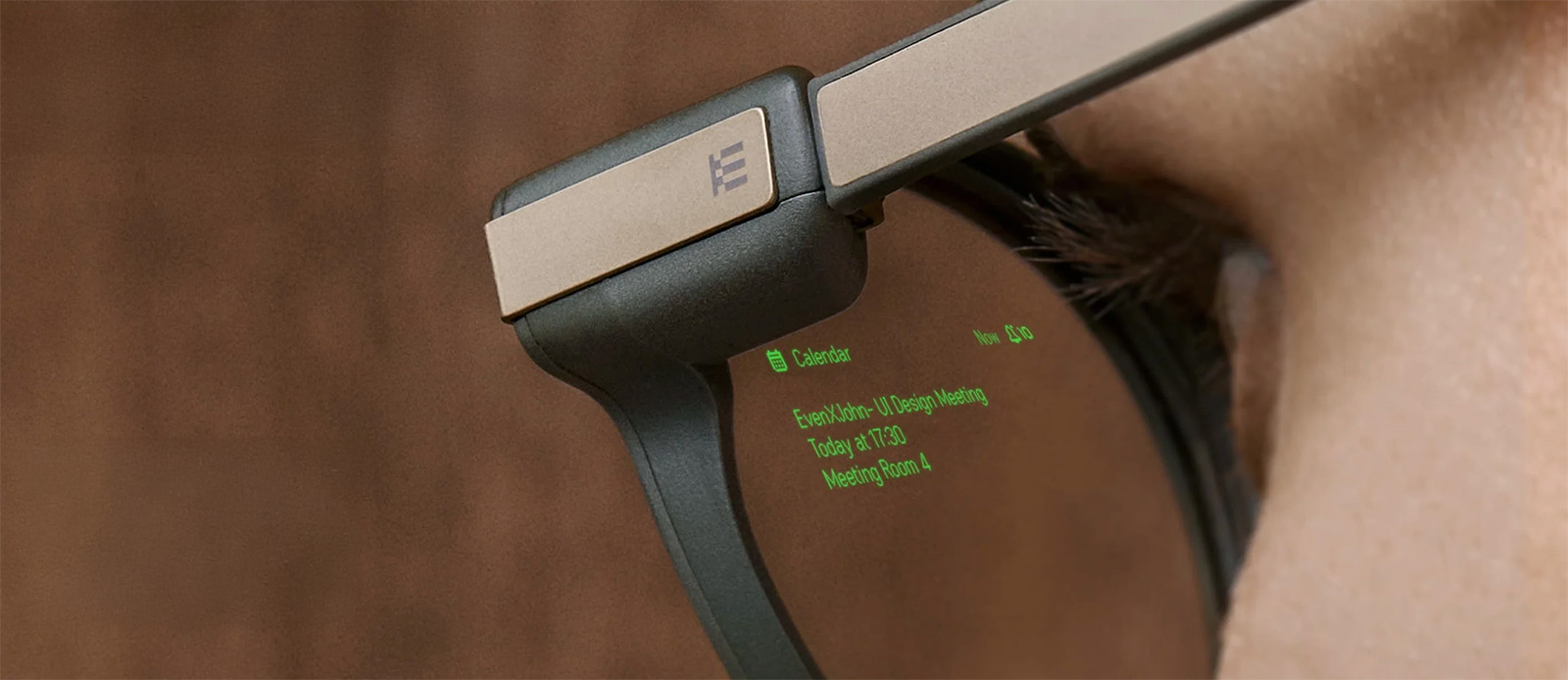
While smart glasses tend to be bulkier than regular eyewear, the G1 strikes a balance between durability and comfort. With a magnesium-titanium alloy frame (44 g), they remain wearable. Their monochrome green display (640 x 200 pixels) evokes the retro feel of ’90s computer terminals, but the design isn’t just nostalgic—green enhances readability and reduces power consumption, crucial for its 1000-nit brightness.

- Components: The tech is concentrated in the temples, which house the battery (160 mAh), Bluetooth 5.2, and touch sensors. They lack a camera, speakers, or bone-conduction audio, assuming users already carry their own audio devices.
- Accessories: The USB-C charging case (2000 mAh) provides up to 2.5 full charges. Clip-on sunglasses are optional (starting at $100), which feels disappointing given the high initial price.
- Durability: While splash- and light rain-resistant, they lack an official IP rating.
Functionality
The G1 activates when you tilt your head up, displaying a basic panel with time, notifications, weather, and optional widgets like stock prices or news. The interface is minimal, with only three widget layouts available.
- Notifications: Displays smartphone alerts without needing to pull out your phone, though direct replies aren’t supported.
- Teleprompter & Notes: Useful for presentations or recordings. QuickNote transcribes speech to text, ideal for journalists.
- Translation: Supports 24 languages with a slight delay (2–3 seconds). Requires the phone for activation, limiting fluidity.
- Navigation: Provides step-by-step directions, reducing the need to check your phone in unfamiliar areas.
- Even AI: Integrates Perplexity and ChatGPT for basic queries, though with the usual limitations of AI assistants.
Controls & Battery Life
- Touch Controls: Just two buttons on the temples, insufficient for all functions, forcing reliance on the phone.
- Battery: Lasts about a day and a half with moderate use. Lacks a power button, leading to standby drain.
Price & Competition
The G1 costs **599∗∗(plus599∗∗(plus150 for prescription lenses and $100 for clip-on shades), placing it in the premium segment. It lacks direct competitors—alternatives like RayNeo (TCL) or The Frame (Brilliant Labs) offer AR but differ significantly. Meta Ray-Bans, while cheaper, lack a heads-up display.
Verdict
The G1 is a promising first-gen device: it delivers on core features but has room for refinement in versatility and fluidity. The biggest hurdle is the price, though their practicality makes them compelling. With software updates, they could become even more indispensable.
The Good:
✔ Clear display, even in sunlight.
✔ Handy translation and navigation.
✔ Sturdy yet comfortable design.
Room for Improvement:
✖ High price for a first-generation product.
✖ Over-reliance on the smartphone.
✖ Features feel limited for the cost.
In short, they’re a solid choice for those seeking subtle, functional tech—but they’re not yet perfect.
By: Nestor Casillo, ForAllTechNews Director