
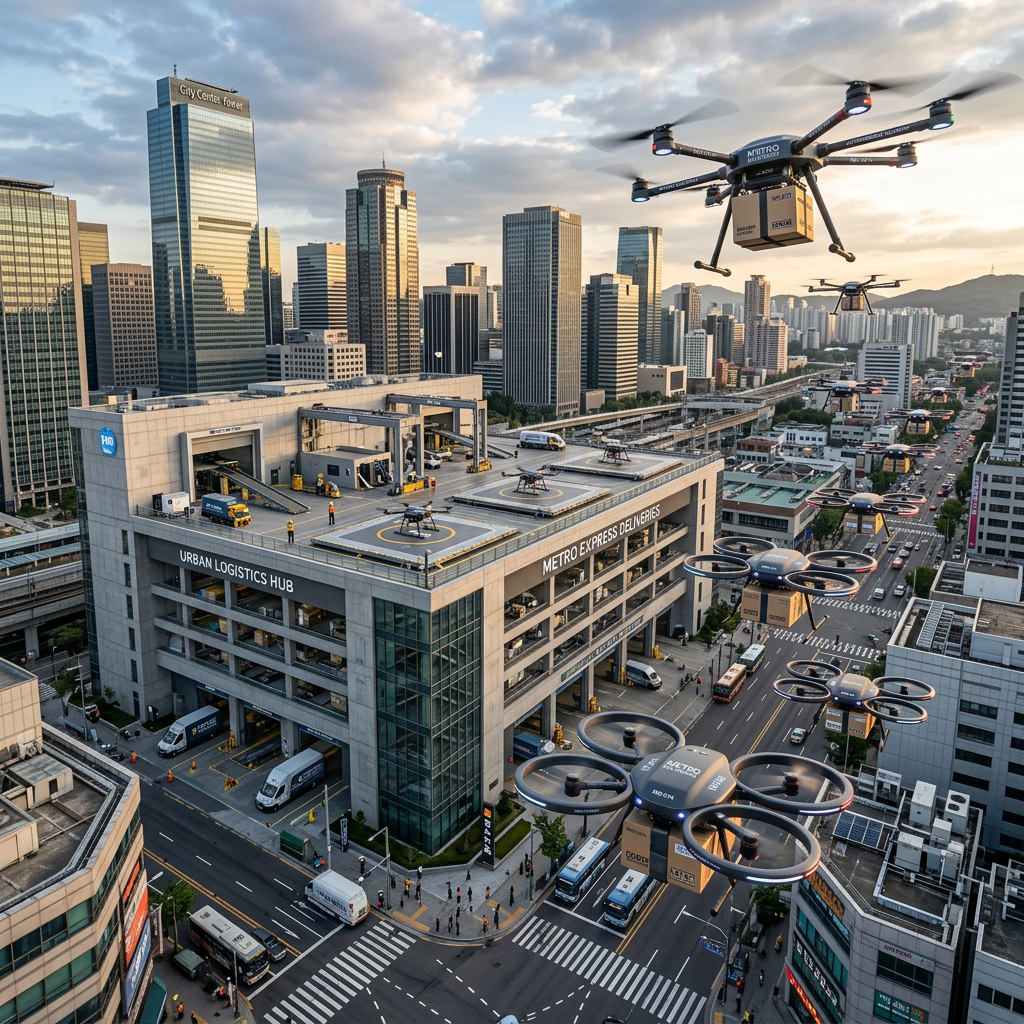
In a move that redefines last-mile logistics, Uber has sealed an alliance with drone delivery pioneer Zipline, with its sights set on reaching one million daily shipments through its Uber Eats platform before the end of the decade. The announcement came this Monday, though the amount of the investment made by the mobility giant was not disclosed.
The first commercial flights are scheduled for late 2026, starting in areas where Zipline already has an operational presence. The roadmap contemplates an accelerated expansion toward dozens of U.S. cities in the coming years. With this initiative, Uber reinforces its strategy of orchestrating a technology partner ecosystem—similar to what it has already deployed with robotaxis—rather than developing its own autonomous solutions, a path that has allowed it to keep pace with innovation after selling divisions such as Elevate and its autonomous vehicle group.
Uber’s chief executive, Dara Khosrowshahi, underscored the potential of this synergy by pointing out that Zipline’s drones can fulfill an order in as little as five to ten minutes. “Truly instant commerce is proving to be an even larger market than traditional food delivery,” he stated in an interview with the Wall Street Journal. “We believe this will represent a strong tailwind for Eats’ next stage of growth.”
However, the bet is not without its challenges. The company has had friction with some of its most relevant allies, such as Waymo, from which it is expected to part ways when their contract expires in 2028, amid growing disagreement over autonomous vehicle regulation. Even so, Uber had already experimented with aerial deliveries through its former Elevate division and, late last year, rekindled its interest by bringing on Israeli startup Flytrex with a smaller investment.
San Francisco-based Zipline arrives at this alliance backed by a recent extended Series H funding round that raised $800 million, boosting its valuation to $7.6 billion. Its co-founder, Keller Cliffton, framed the agreement within a long-term vision: “Every great transportation revolution has redefined where we live, how businesses operate, and how economies grow. Together with Uber, we are taking a firm step toward a world where getting what you need is as fast and effortless as sending a text, no matter where you are.”
With this alliance, Uber not only seeks to expand Uber Eats’ offering but also to position itself as the hub of a new logistics era that promises to compress waiting times to their minimum expression, while navigating regulatory hurdles and the tensions inherent to an increasingly competitive ecosystem.
ForAllTechNews