
During a meeting in July, Samsung Electronics President Jay Y. Lee made it clear to Vietnamese Prime Minister Phạm Minh Chính that the company’s future is tied to Vietnam’s. “Vietnam’s success is Samsung’s success, and its development is ours as well,” Lee stated, reaffirming the company’s commitment to investing in the country as its primary display manufacturing hub.
Since entering Vietnam in 1989, the South Korean giant has invested billions to establish one of its largest production bases outside China. This move accelerated when former U.S. President Donald Trump imposed tariffs on Chinese goods, prompting other companies to follow Samsung’s lead. Today, the firm is Vietnam’s largest foreign investor and exporter.
A Risky Dependence
Nearly 60% of the 220 million phones Samsung sells globally each year are manufactured in Vietnam, many of them destined for the U.S., where the company is the second-largest smartphone seller, according to Counterpoint. However, this reliance now poses a risk.
Vietnam faces the threat of a 46% tariff imposed by Trump, forcing Hanoi to negotiate for a reduction. Although a temporary reprieve was secured (lowering the rate to 10% for 90 days), Reuters reports that Samsung would be among the hardest hit if tariffs rise in July.
“Vietnam is our main production hub, but the proposed tariffs are higher than expected, creating uncertainty,” a Samsung executive admitted under anonymity.
Trade Pressure and Possible Alternatives
Vietnam’s trade surplus with the U.S. (around $120 billion) has made it a target of American trade policy. Sources say Hanoi hopes to reduce tariffs to a range of 22%-28%, but uncertainty is already pushing Samsung and its suppliers to consider adjustments.
Among the options are shifting some production to India or South Korea, though such moves would be costly and time-consuming. Apple, another affected giant, faces an even bigger challenge, as 80% of iPhones sold in the U.S. come from China, where tariffs have soared to 145%.
Vietnam: A Less Attractive Destination?
Fear of tariffs adds to other challenges in Vietnam, including power shortages, higher taxes for multinationals, and a growing skilled labor shortage. Some South Korean firms already describe the situation as “very serious.”
Nomura economists suggest that if Vietnam loses appeal, India could be the big winner. In fact, New Delhi is already negotiating a trade deal with the U.S., while Vietnam tries to ease tensions by increasing imports from America.
Unease in the Factories
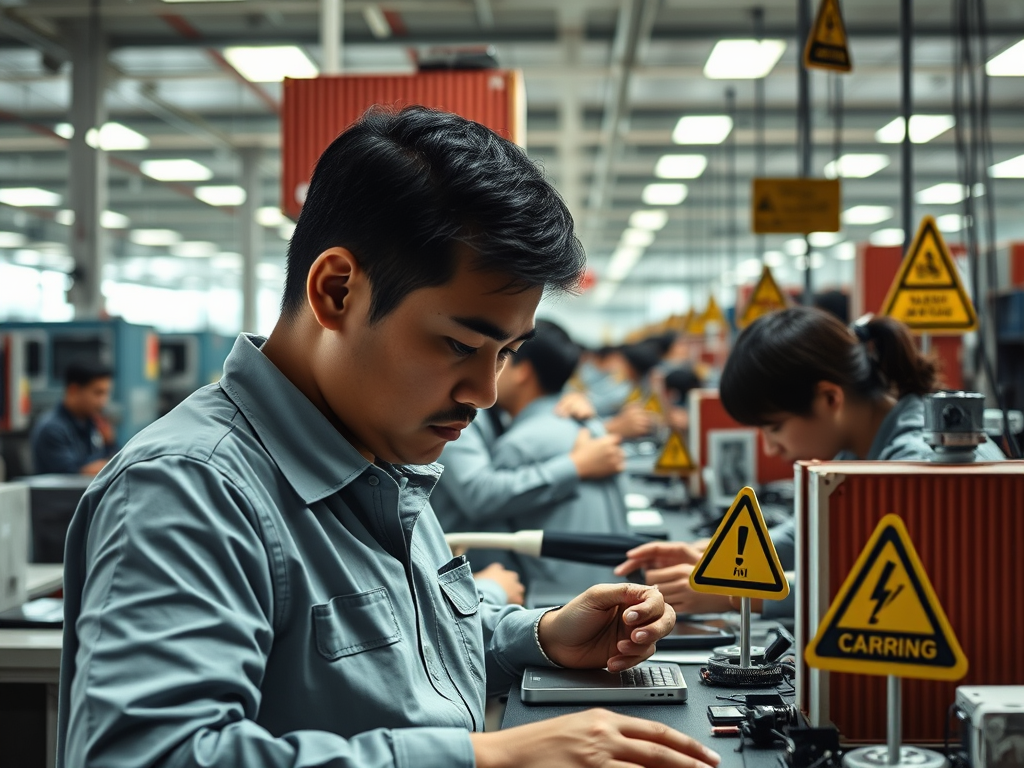
As Samsung weighs its options, uncertainty grows among workers. “I’m afraid they’ll cut everything,” said Nguyễn Thị Hào, an employee at a Samsung plant in Thái Nguyên.
With electronics making up 45% of Vietnam’s exports to the U.S.—and Samsung accounting for 15% of the country’s total exports—any tariff decision could have a profound impact on Vietnam’s economy and the company’s global strategy.
Key Takeaway: Vietnam and Samsung are at a crossroads, where Trump’s tariffs could redefine global supply chains and the future of manufacturing in the Southeast Asian nation.
By: Nestor Casillo, ForAllTechNews Director