
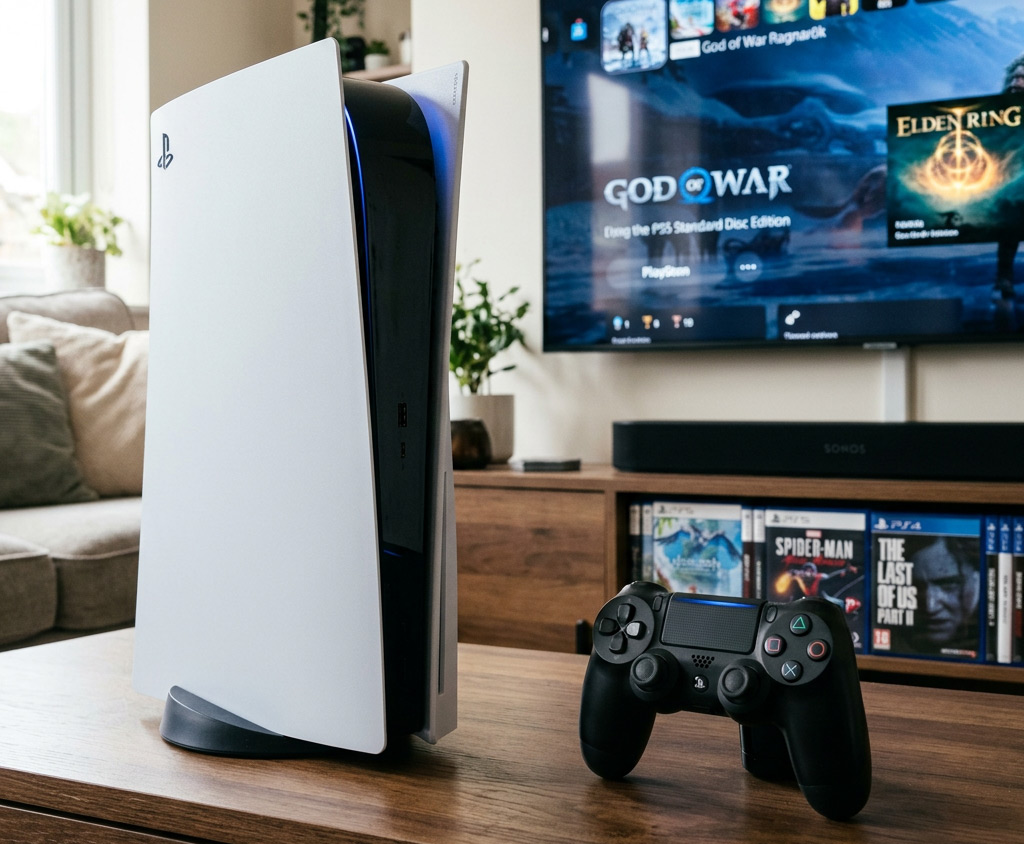
Sony is facing one of the most controversial periods in its recent history. Over the past several months, the company has introduced a series of decisions that clearly signal its commitment to an entirely digital ecosystem. While these changes align with the industry’s ongoing transformation, they have also sparked widespread debate among millions of gamers who question whether the future of digital entertainment means giving up true ownership.
The most significant announcement came with Sony’s confirmation that, beginning in January 2028, all new PlayStation game releases will be distributed exclusively in digital format, marking the end of physical disc releases for new titles. The company argues that the move reflects the continued growth of digital game sales, but critics point out that it also eliminates the ability to collect, lend, resell, or preserve physical copies.
Concerns have grown further following the introduction of updated digital licensing policies. Some recently purchased digital games now require periodic online license verification to remain accessible. Although Sony maintains that these checks are intended solely to validate ownership and not to revoke users’ purchases arbitrarily, the change has reignited a long-standing debate: do consumers truly own the games they buy, or are they simply purchasing a license that can be modified under certain conditions?
The controversy extends beyond video games. Previous incidents involving digital movie libraries demonstrated that access to purchased content can be affected when licensing agreements between distributors and content providers expire or change. While some of those issues were eventually resolved through renewed agreements, the situation highlighted a growing concern among consumers that digital purchases may not guarantee permanent access.
At the same time, many players have criticized price increases on certain PlayStation titles and the implementation of dynamic pricing in some markets. These developments have fueled concerns that an all-digital marketplace could reduce competition while giving publishers greater control over pricing and distribution.
However, not every claim circulating online has been substantiated. Reports alleging that a group of Brazilian hackers breached Sony’s systems, encrypted the company’s entire game catalog, and released it online have not been supported by credible public evidence. If such a large-scale security breach had occurred, it would almost certainly have been widely reported by major cybersecurity organizations and international news outlets.
Whether viewed as innovation or as an erosion of consumer rights, Sony’s recent decisions illustrate a broader transformation taking place across the digital entertainment industry. The debate is no longer simply about physical versus digital media—it is increasingly about ownership, preservation, and the balance of power between consumers and the platforms that deliver their content.
ForAllTechNews
Image credit: Easy-Peasy.AI / CC BY 4.0