
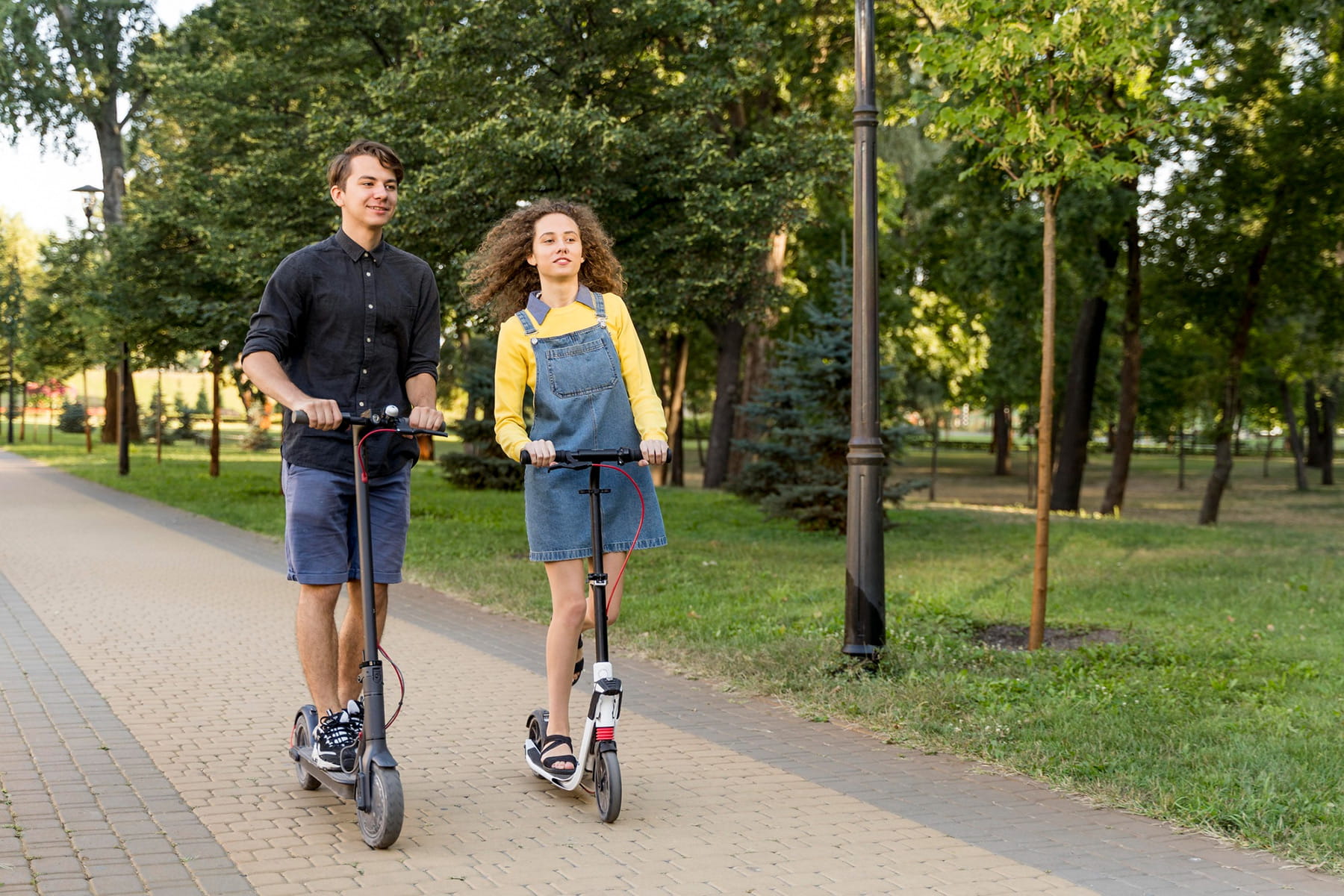
In recent decades, urban mobility has undergone a quiet but rapid transformation. More and more children and teenagers are choosing to get around on two wheels powered by electric motors. Yet what may seem like a natural evolution of childhood play and transportation is quickly becoming a worrying public health issue—particularly in the field of pediatric traumatology.
Those of us who grew up in earlier decades remember with a certain nostalgia the scrapes, bruises, and, in the worst cases, the occasional simple fracture after a fall from a bicycle or skateboard. Those injuries, though painful, were usually proportional to the force and speed inherent in children’s play. The physics of human movement, combined with the relatively low speed of those traditional vehicles, rarely resulted in permanent damage or life-threatening situations.
Today, however, that landscape has changed dramatically. The emergence of electric bicycles (e-bikes) and electric scooters (e-scooters) has transformed not only the urban environment but also the very nature of childhood accidents. These devices, which can reach speeds of 15 to 20 miles per hour—and even more in unregulated models—dangerously reduce reaction times for both riders and pedestrians. A child traveling at that speed has far fewer seconds to brake, dodge an obstacle, or anticipate an unexpected turn. And when a collision does occur, the energy released is exponentially greater than in a fall from a non-motorized vehicle.
As specialists in the orthopedics department of a major children’s hospital, we have witnessed this alarming trend firsthand. Over the past two years, emergency visits and consultations related to e-bike and e-scooter accidents have risen significantly among patients aged 8 to 16. We are no longer dealing primarily with simple wrist or collarbone fractures; increasingly, we are treating traumatic brain injuries, internal bleeding, open femur fractures, and spinal cord injuries that can leave lasting disabilities.
Compounding the problem is the fact that many of these devices are sold without clear regulations regarding minimum age requirements, mandatory helmet use, or maximum power output. Furthermore, urban infrastructure is often ill-equipped to safely integrate these vehicles with pedestrians, cars, and traditional cyclists. The lack of dedicated bike lanes, combined with insufficient road-safety education tailored to these new modes of transport, turns every ride into a potential accident scenario.
This is not about demonizing technology or denying young people access to modern forms of mobility. Rather, it is about understanding that using these devices carries a greater responsibility. It is urgent that parents, educators, manufacturers, and health authorities work together to establish clear boundaries, enforce the mandatory use of protective gear, and foster a culture of safe riding from an early age.
In the hallways of our hospital, the evidence is undeniable: accidents involving electric bicycles and scooters are no longer a rarity—they are a silent emergency that grows more pressing by the day. What is most troubling is that many of these injuries could have been prevented with proper information, adult supervision, and common sense. Because while speed may be thrilling, our children’s safety should never be a calculated risk.
ForAllTechNews