
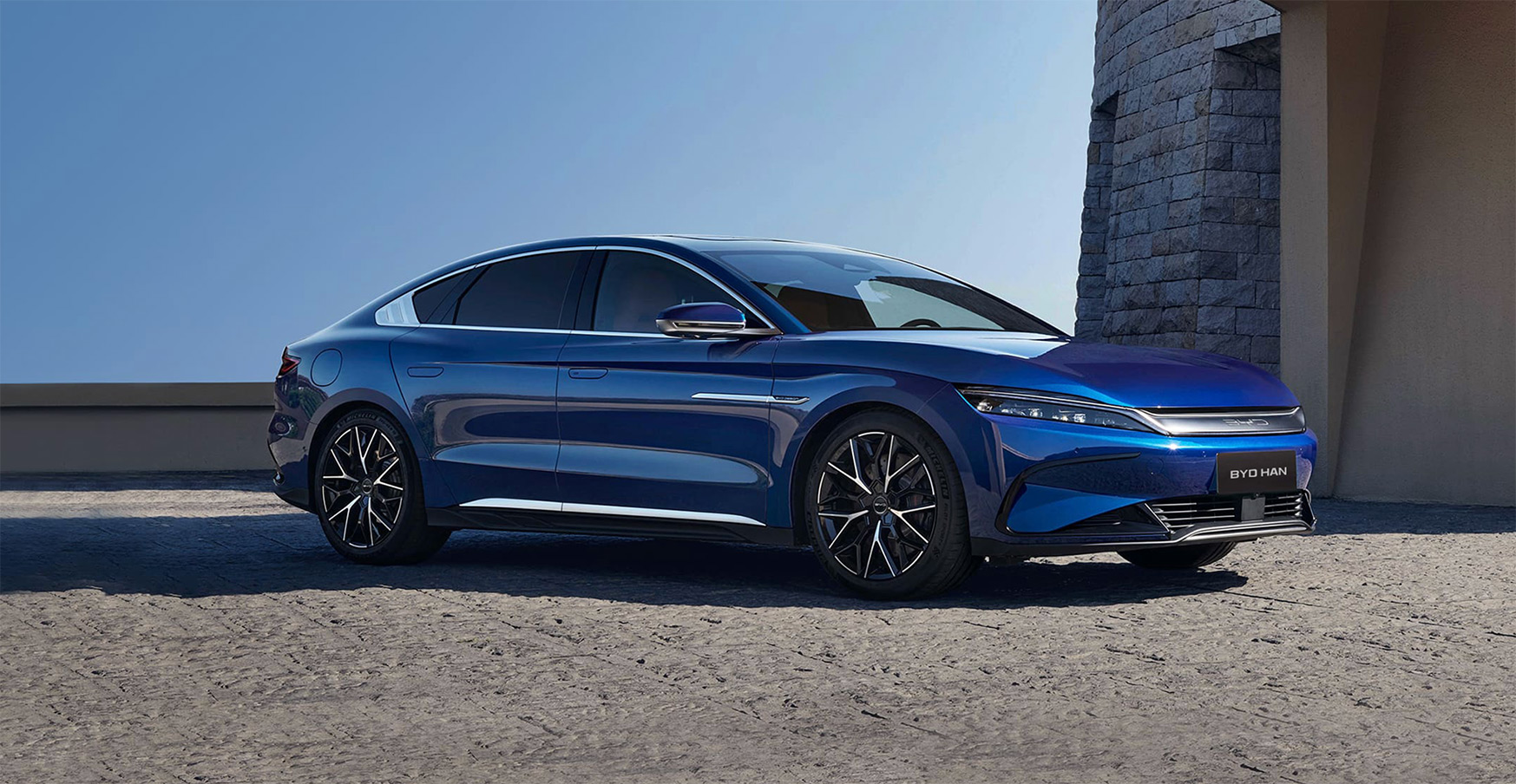
The Chinese automaker BYD sparked excitement this week by announcing that its new Han L sedan can regain up to 248 miles of range in just five minutes. However, the company did not provide many details or respond to TechCrunch’s requests for clarification. To understand how BYD has developed an electric vehicle that seemingly charges as quickly as a gasoline car, we investigated and pieced together the available information. What we found largely supports the company’s claims, albeit with some nuances.
The Heart of the System: The Battery
The secret to the Han L’s ultra-fast charging lies in its internal electrical infrastructure, starting with its battery. According to CarNewsChina, citing regulatory documents, the vehicle uses an 83.2 kWh lithium iron phosphate (LFP) battery pack, operating at 945 volts (though BYD rounds this figure to 1000 volts in its marketing materials).
The LFP battery chemistry is key to its fast-charging capability. These batteries are known for their stability and safety, as they are less prone to fires compared to others, such as nickel-manganese-cobalt (NMC) batteries. Additionally, their electrochemical design allows for faster charging. BYD, with years of experience in developing LFP batteries, has integrated its latest innovation, the Blade 2.0 architecture, into this model, suggesting advanced mastery of this technology.
High-Voltage Electrical System
The battery is complemented by a 945-volt electrical system, a growing trend in the automotive industry. High-voltage systems generate less heat, enabling more efficient and safer energy transfer. Companies like Lucid already use 900-volt architectures, while Hyundai, Kia, and Porsche operate at 800 volts. Tesla, on the other hand, varies by model: the Cybertruck uses 800 volts, while other models run at around 400 volts.
The Han L is capable of charging up to 1 megawatt (1000 kilowatts), an impressive figure considering that the fastest chargers available in the U.S. offer only 350 kilowatts. However, handling a 1 MW charge generates significant heat, which would require extremely thick cables. To address this, BYD has implemented a dual-port charging system, allowing two 500 kW chargers to operate simultaneously, making the process more manageable.
Range and Charging Reality
BYD claims that the Han L can add 248 miles of range in five minutes. However, it is unlikely that drivers will achieve that distance in real-world conditions. The Chinese CLTC testing cycle, used to measure range, is known to be optimistic, exceeding EPA estimates in the U.S. by about 35%. In practice, it is more realistic to expect around 160 miles (257 km) with a five-minute charge and about 280 miles (450 km) with a fully charged battery. Still, the charging times are remarkably fast: from 16% to 80% in 10 minutes and from 16% to 100% in 24 minutes.
Charging Infrastructure
The speed of EV charging depends not only on the car but also on the availability of powerful chargers. BYD plans to install over 4,000 charging stations in China, though this will require significant upgrades to the electrical grid, as a 1 MW draw could overwhelm existing infrastructure.
Will This Technology Reach the U.S.?
Although the Han L will not be available in the U.S. in the near future due to 100% tariffs on Chinese-made vehicles, its starting price of approximately $37,000 would make it highly competitive. However, ultra-fast charging is not far off for Americans. Currently, some EVs can already charge from 20% to 80% in 18 minutes, and it is only a matter of time before manufacturers reduce these times further. BYD is leading the way, but the industry as a whole is moving toward a future where fast charging will be the norm.
By: Nestor Castillo, ForAllTechNews Director