
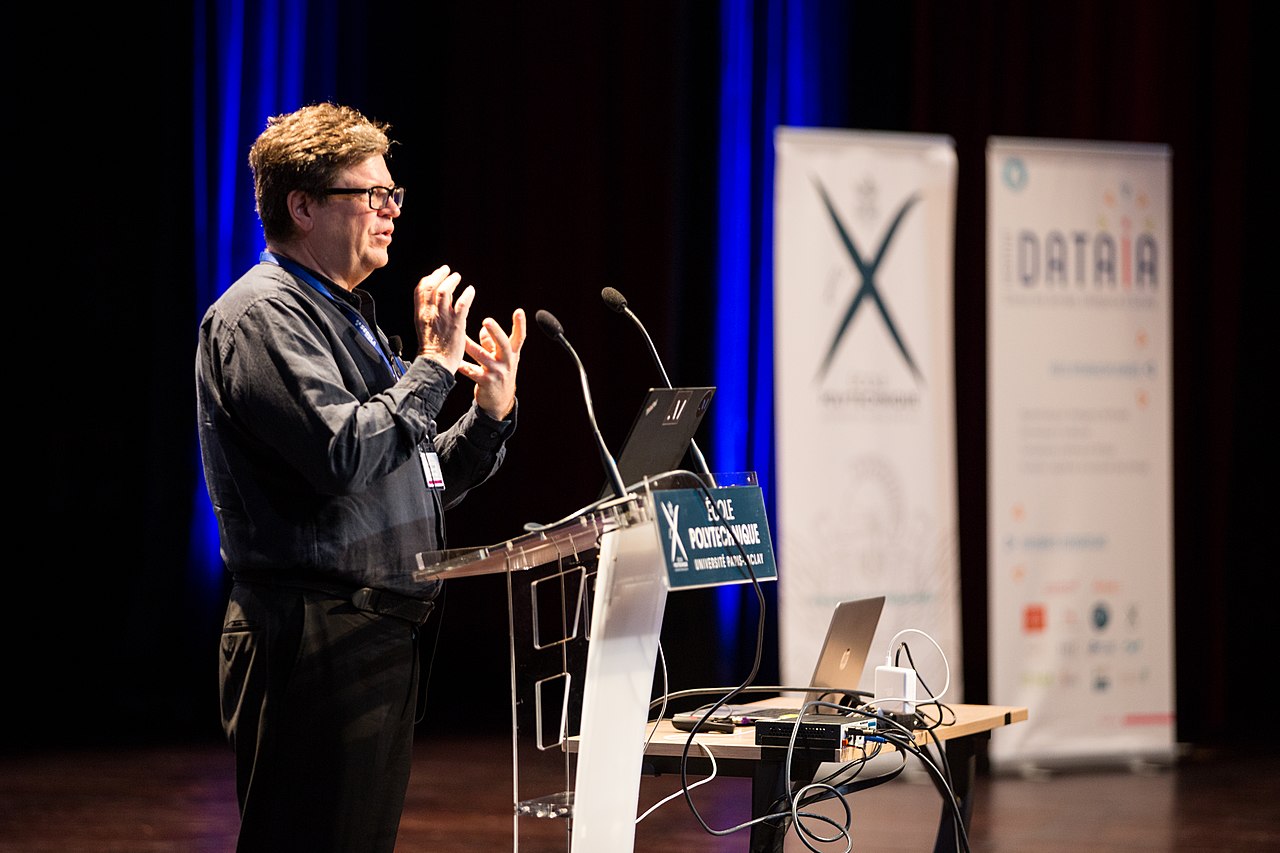
Researcher Yann LeCun, an AI pioneer and Turing Award winner, presents a well-founded critique of the current direction of the AI industry, dominated by Large Language Models (LLMs), and outlines the pillars of his new initiative to develop systems with a genuine understanding of the physical world.
Critique of the Limits of Current LLMs and AI
LeCun argues that while LLMs have proven useful in manipulating language, there is a “collective illusion” about their potential to achieve human-level intelligence. Their main limitation lies in their disconnection from the real world: they operate in the discrete realm of text and lack the fundamental capacity to reason, plan, and predict the consequences of their actions in physical environments. This shortcoming explains why, despite advances, we do not have agile domestic robots or fully autonomous vehicles. According to LeCun, overcoming this barrier requires conceptual breakthroughs, not simply scaling existing models.
The Proposal: “World Models” and JEPA
As an alternative, LeCun advocates for the development of “world models”—systems that learn abstract representations of the dynamics of the physical world through observation, similar to how a child develops common sense. The key architecture to achieve this is JEPA (Joint Embedding Predictive Architecture), which he created. Unlike generative AI, JEPA does not attempt to predict every future detail (an impossible task given the world’s unpredictability), but learns to predict in a space of abstract representations, capturing underlying rules while ignoring irrelevant details.
This approach would allow systems to:
- Predict the behavior of complex systems (industrial, physical, biological) from sensor data.
- Equip AI agents with common sense, enabling reliable planning and reasoning.
- Unlock applications such as predictive personal assistants, truly useful domestic robots, and Level 5 autonomy.
Advocacy for Open-Source AI and Technological Sovereignty
LeCun is a staunch defender of open source as an engine of innovation and diversity. He criticizes the growing trend toward closed approaches in American labs (like OpenAI and Anthropic), which he considers a strategic mistake. His new company, Advanced Machine Intelligence (AMI), based in Paris, positions itself as a sovereign third way against the US-China duopoly. He argues that a diversity of AI assistants—with different values, biases, and linguistic capabilities—is as crucial for the digital society as a diverse press is for democracy.
Transition and Post-Meta Focus
After leaving his role as Chief AI Scientist at Meta’s FAIR lab, LeCun notes that while the lab was successful in research, the company struggled to translate these advances into products. He disagrees with decisions such as disbanding the robotics group. At AMI, he will take on a visionary and scientific role, focused on cutting-edge research, while delegating operational management to a CEO with entrepreneurial experience, leveraging global talent and attracting researchers convinced that the future lies in “world models.”
Conclusion
LeCun’s vision represents a paradigm shift: moving from systems expert at manipulating linguistic symbols to systems that build an internal model of the world to interact with it intelligently. He believes the decisive advances will come from academic research and industrial labs focused on these fundamental problems, not from the incremental scaling of LLMs. His bet is that the future of robust and truly useful AI depends on this physical understanding of the world—a complex but necessary path.
By: Nestor Castillo, ForAllTechNews Director
Image credit: Wikimedia Commons / CC BY-SA 2.0 / Attribution-ShareAlike 2.0 Generic