
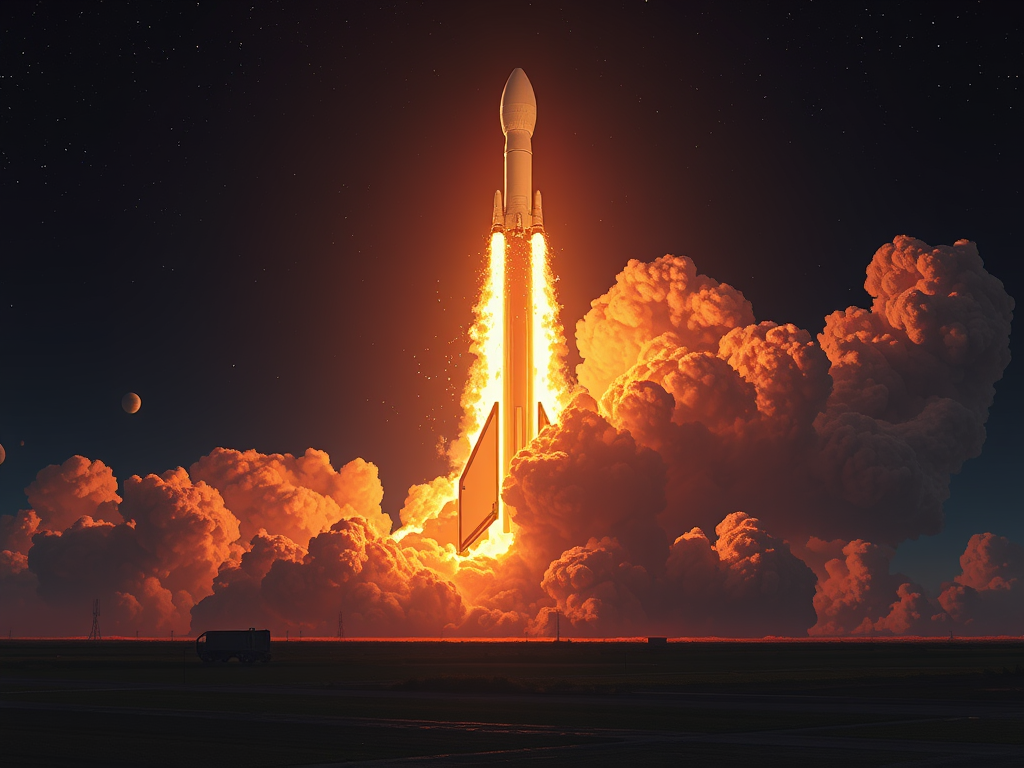
A SpaceX Starship rocket exploded during testing at its Texas facility, adding another failure to Elon Musk’s recent challenges in his space ambitions, which include the goal of sending humans to Mars.
According to footage released late Wednesday, a violent explosion engulfed the spacecraft as it stood upright at SpaceX’s Starbase, followed by towering flames and a thick plume of smoke that lit up the night sky. Local witnesses reported that the blast was so intense it rattled windows and shook objects in nearby homes.
The incident occurred during what appeared to be a static fire test, a routine pre-launch rehearsal in which the rocket’s engines are fired while the vehicle remains anchored to the pad. This procedure allows engineers to evaluate systems without an actual liftoff.
In a statement, SpaceX confirmed that the Starship “experienced a significant anomaly” while preparing for its tenth test flight. The company assured that no injuries occurred and that the incident posed no danger to the public.
This latest setback extends a series of difficulties for a program critical not only to NASA’s plans to return astronauts to the Moon but also to Musk’s more audacious aspirations—establishing crewed and cargo missions to Mars. The accident comes at a challenging time for the billionaire, as his company Tesla faces declining demand for its electric vehicles and follows a public dispute with former President Donald Trump.
SpaceX holds contracts with NASA worth approximately $4 billion to use Starship, the world’s most powerful launch system, for future lunar missions.
Just a month ago, the massive spacecraft disintegrated mid-flight after losing control, adding to two previous failures in January and March, when explosions shortly after liftoff scattered debris over the Gulf of Mexico and disrupted air traffic. According to SpaceX, the first incident was caused by a fuel leak, while the second resulted from a malfunction in one of the Raptor engines.
Although Starship 10 had no set launch date, it is now unclear when the next flight attempt will occur. Following the ninth test’s failure, the company stated it would analyze data and make adjustments before proceeding.
Despite recent setbacks, SpaceX achieved key milestones last year, including the successful capture of its booster using robotic arms nicknamed “chopsticks.” Designed for reusability, Starship is intended to serve as the primary spacecraft for transporting humans to Mars and returning them to Earth.
Musk has stated he aims to send a Starship manned by Tesla robots to the Red Planet by 2026.
As the world’s richest man steps back from his political ventures to refocus on his business empire, it remains to be seen how much time he will dedicate to SpaceX and what changes he will implement to get the Starship program back on track after these incidents.
By: Nestor Castillo, ForAllTechNews Director