
Rodney Brooks, a pioneer in robotics from MIT, believes that people are greatly overestimating generative AI. As a Panasonic Emeritus Professor of Robotics at MIT and co-founder of Rethink Robotics, iRobot, and Robust.ai, his opinion is significant. Additionally, he led the MIT Computer Science and Artificial Intelligence Laboratory (CSAIL) for a decade starting in 1997.
Brooks maintains a scorecard on his blog where he evaluates his predictions about the future of AI. He believes it is crucial to moderate the excitement around generative AI, considering it impressive but not as powerful as many think. “I’m not saying LLMs aren’t important, but we need to be cautious about how we evaluate them,” he told TechCrunch.

According to Brooks, generative AI is good at certain specific tasks but cannot do everything a human can, and people tend to overestimate its capabilities. “When a human sees an AI system perform a task, they immediately generalize it to other similar tasks and make an optimistic estimate of the system’s competence,” he explained. This error comes from using a human performance model to evaluate AI.
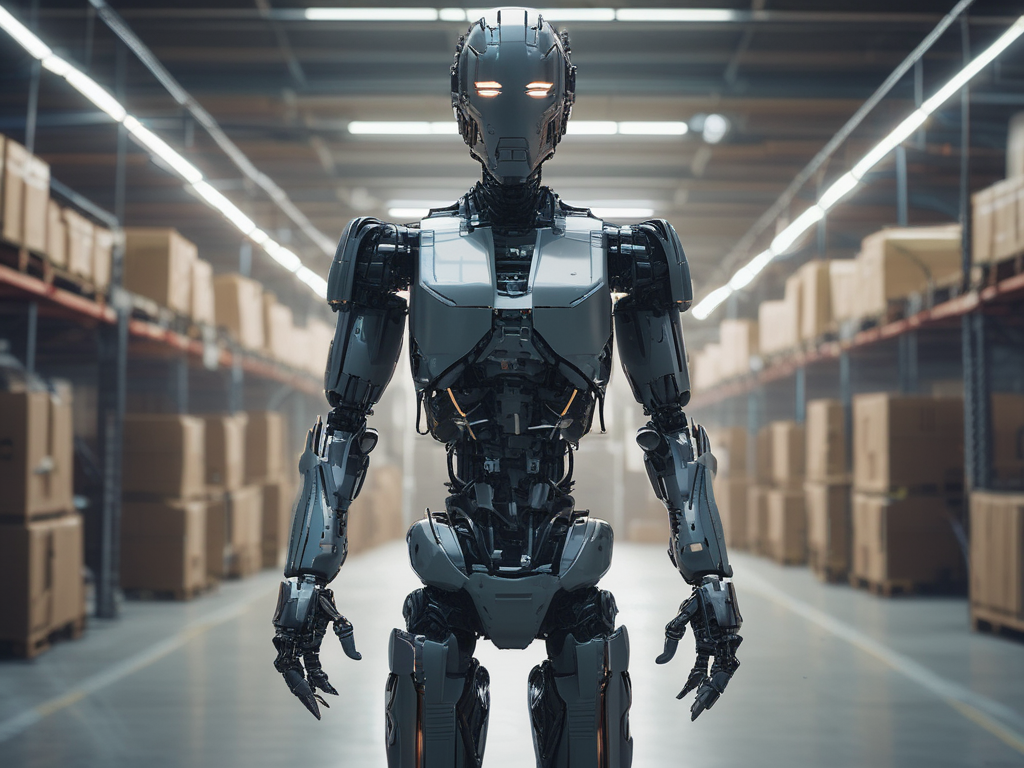
Brooks added that it is a mistake to assign human capabilities to generative AI since it is neither human nor human-like. This leads to inappropriate suggestions for its use, such as the idea of using LLMs to direct warehouse robots, which, according to him, would slow down operations instead of optimizing them. At his company, Robust.ai, they prefer connecting the robots directly to warehouse management software for optimal efficiency.
Another lesson he has learned is that one should not try to do too much with AI and robots; it is better to solve specific, easily integrable problems. For example, in warehouses where conditions are controlled, robots can operate efficiently without obstacles.
Brooks also emphasizes the importance of designing robots and technology with a specific purpose that is easy to understand and implement. At his company, they have designed robots that resemble shopping carts, facilitating interaction between humans and robots. “The form factor we use is not humanoids walking around, although I have built more humanoids than anyone else. These look like shopping carts,” he said.
Finally, Brooks notes that there is a misconception of perpetual exponential growth in technology, influenced by Moore’s Law. He uses the example of the iPod to illustrate that technology does not always follow that trajectory. Although he acknowledges that LLMs could be useful for domestic robots in the future, especially for an aging population, he warns that this will bring its own challenges.
In conclusion, Brooks emphasizes that while AI and robots have great potential, it is crucial to have realistic expectations and use these technologies sensibly and specifically.
By: Nestor Castillo, ForAllTechNews Director
Image Credits: Wikimedia Commons / 2.0 Generic CC By 2.0 Deed