
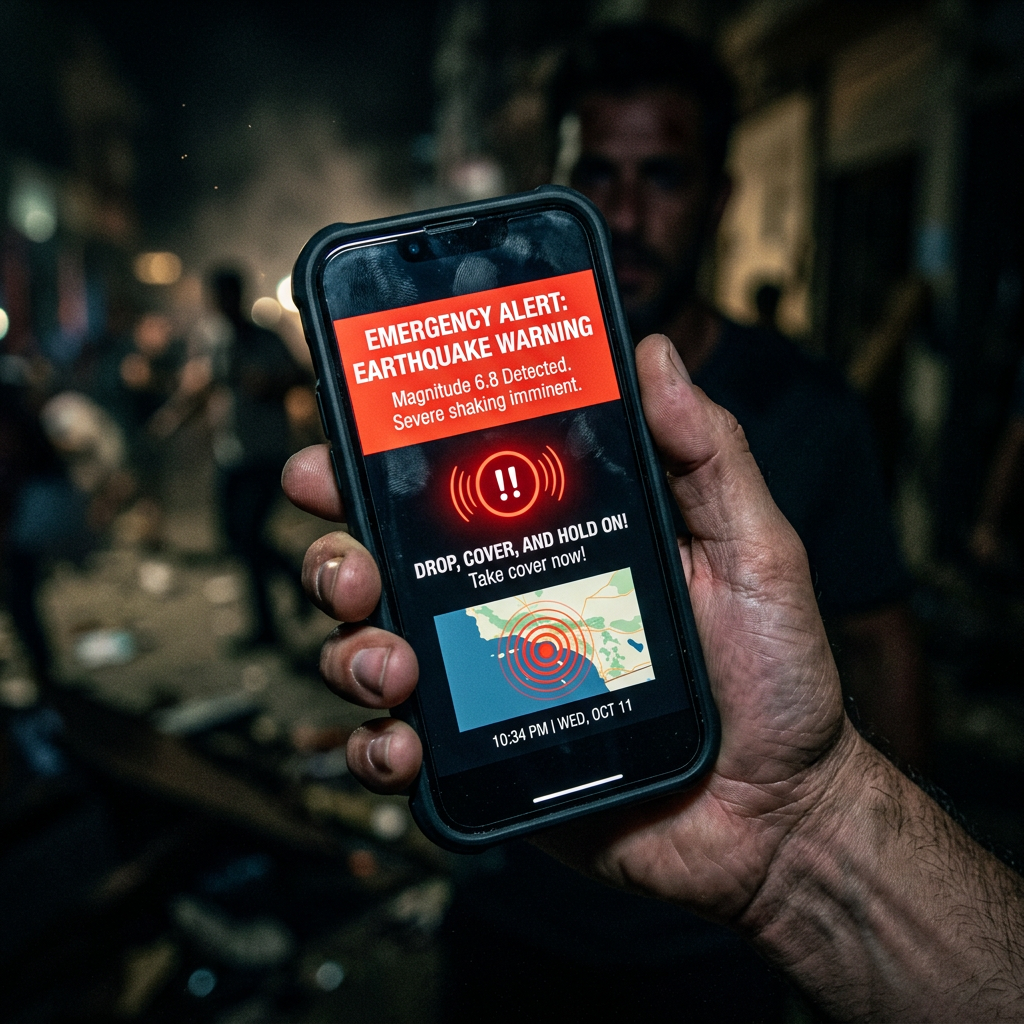
Yes, it is true that some people in Venezuela received an alert on their Android phones before they felt the earthquake. However, it is important to clarify that not everyone received the notification, and the amount of warning time varied depending on the user’s distance from the earthquake’s epicenter.
Following the earthquake, many users reported that their phones displayed an alert anywhere from a few seconds to approximately one minute before the strongest shaking began. In cities located farther from the epicenter, some people said the warning gave them enough time to react, move to a safer location, or evacuate their homes before the most intense tremors arrived.
This was made possible by Android Earthquake Alerts, a system developed by Google. Rather than predicting earthquakes, the system detects the first seismic waves, known as P-waves, which travel faster and usually cause little or no damage. The accelerometers built into millions of Android smartphones act as a vast network of seismic sensors. When a large number of devices detect the same vibration pattern simultaneously, Google’s servers analyze the data, estimate the earthquake’s location and magnitude, and send alerts to phones that have not yet been reached by the more destructive S-waves.
The amount of advance warning depends largely on a person’s location. People who are very close to the epicenter usually receive little or no warning because the seismic waves reach them almost immediately. In contrast, those who are tens or even hundreds of kilometers away may receive an alert several seconds—or in some cases up to a minute—before experiencing the strongest shaking.
To take advantage of this technology, users must have Earthquake Alerts enabled in the Safety & Emergency settings (the menu name may vary depending on the device manufacturer), along with location services and Google Play Services. Today, the system is available in more than 90 countries and helps protect billions of Android devices worldwide.
In conclusion, it is true that some people in Venezuela received an earthquake alert up to approximately one minute before the shaking reached them. However, the system does not predict earthquakes. Instead, it serves as an early warning system that takes advantage of the difference in speed between the fast-moving P-waves and the slower, more destructive S-waves, providing people with valuable seconds to prepare and respond before the strongest ground motion begins.
By: Nestor Castillo, ForAllTechNews, Director