
According to Stanford’s 2026 AI Index, artificial intelligence is advancing so rapidly that keeping up has become a major challenge.
Amid a flood of contradictory headlines — calling AI a gold rush, a bubble, a job killer, or a technology that can’t even tell time — Stanford’s annual report from the Institute for Human-Centered AI brings clarity. Though some predicted a slowdown, the most advanced models continue to improve. AI adoption is outpacing that of personal computers or the internet in their early days. AI companies are generating record revenues while spending hundreds of billions on infrastructure. Benchmarks, regulations, and the job market are all struggling to keep pace. AI is racing ahead while the rest of us scramble to catch up.
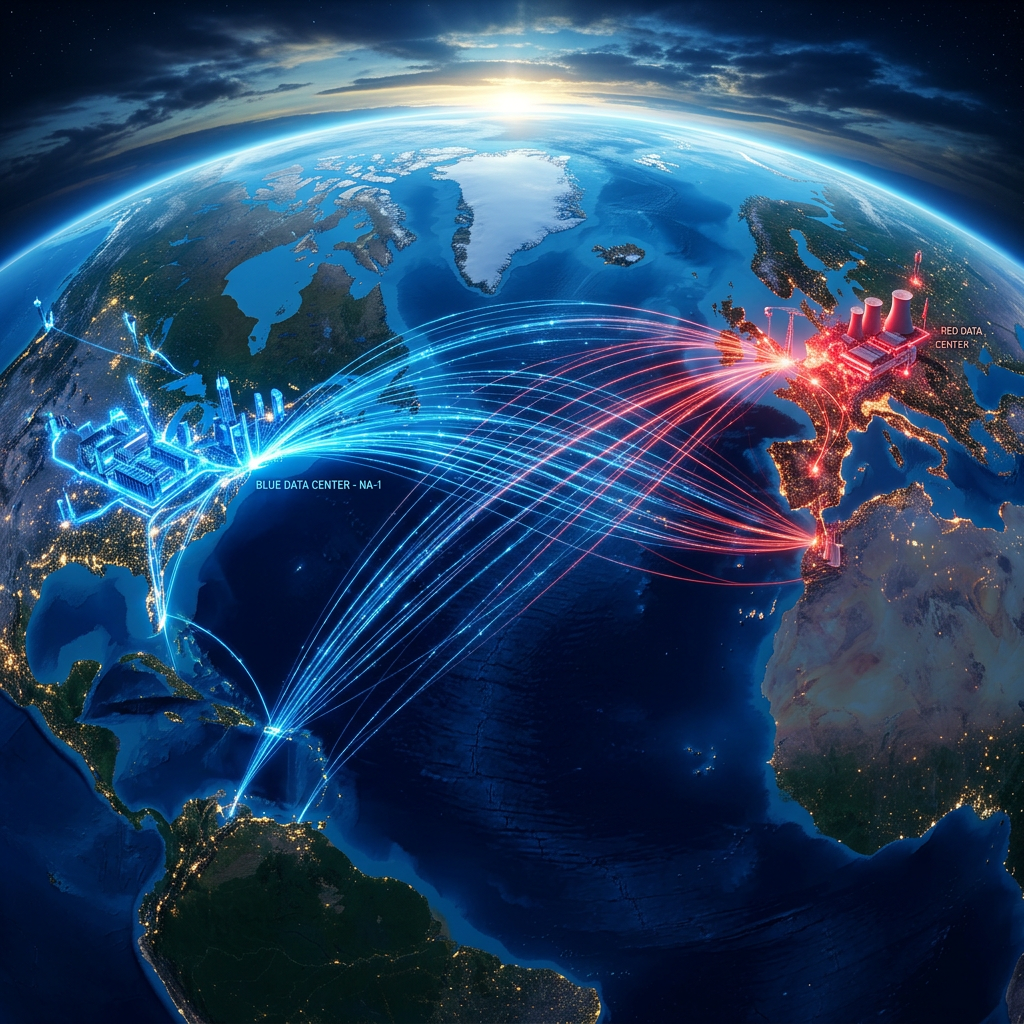
This speed comes at a cost: data centers worldwide consume 29.6 gigawatts of power — equivalent to New York State’s peak demand. Running GPT-4o alone could consume drinking water for 12 million people. Meanwhile, the chip supply chain remains fragile, with nearly all cutting-edge AI chips manufactured by TSMC in Taiwan.

U.S. and China in a Dead Heat
In the geopolitical race for AI dominance, both countries are nearly tied, according to the Arena ranking platform. In early 2023, OpenAI led with ChatGPT, but by 2024, Google and Anthropic closed the gap. In February 2025, China’s DeepSeek R1 briefly matched ChatGPT. As of March 2026, Anthropic leads, followed closely by xAI, Google, and OpenAI. Chinese models lag only slightly. Competition now centers on cost, reliability, and real-world usefulness.
The U.S. has more powerful models, more capital, and over 5,400 data centers — more than ten times any other country. China leads in AI research publications, patents, and robotics. A growing lack of transparency — major companies no longer share training code, parameter counts, or dataset sizes — hinders safety research, warns co-author Yolanda Gil.
Steady Improvement, but Blind Spots Remain
AI models now match or exceed human experts on PhD-level science, math, and language tests. In software engineering, top scores jumped from 60% in 2024 to nearly 100% in 2025. Yet AI shows “uneven intelligence”: robots succeed in only 12% of household tasks, though autonomous vehicles operate in several cities. No single model dominates law or finance.
How We Test AI Is Broken
Many benchmarks are poorly designed or vulnerable to manipulation. One popular math benchmark has a 42% error rate. Strong test performance doesn’t always translate to real-world results. There are hardly any benchmarks for AI agents or robots. Companies are sharing less, and independent tests sometimes contradict their claims.
Early Labor Market Impact
More than half the world’s population now uses AI — faster adoption than PCs or the internet. 88% of organizations and four in five university students use AI. Employment for young software developers (ages 22–25) has dropped nearly 20% since 2022, possibly due to AI. One-third of companies expect AI to reduce their workforce in the coming year, especially in customer service, supply chains, and software engineering. Productivity is up 14–26% in some areas, but not in tasks requiring complex judgment.
Mixed Public Sentiment
59% of people worldwide believe AI will bring more benefits than harms, yet 52% say it makes them nervous. Experts are far more optimistic than the public about AI’s impact on work, education, and healthcare, though both agree it will harm personal relationships and elections. In the U.S., distrust of government regulation of AI is the highest in the world.
Regulation Falling Behind
The EU has enacted the first bans under its AI Act. Japan, South Korea, and Italy have passed national AI laws. The U.S. federal government has moved toward deregulation, while states have passed a record 150 AI-related bills, including California’s SB 53 and New York’s RAISE Act. Still, regulation lags far behind the technology. As Yolanda Gil puts it: “We don’t have a good handle on these systems.”
By: Nestor Castillo, ForAllTechNews Director