
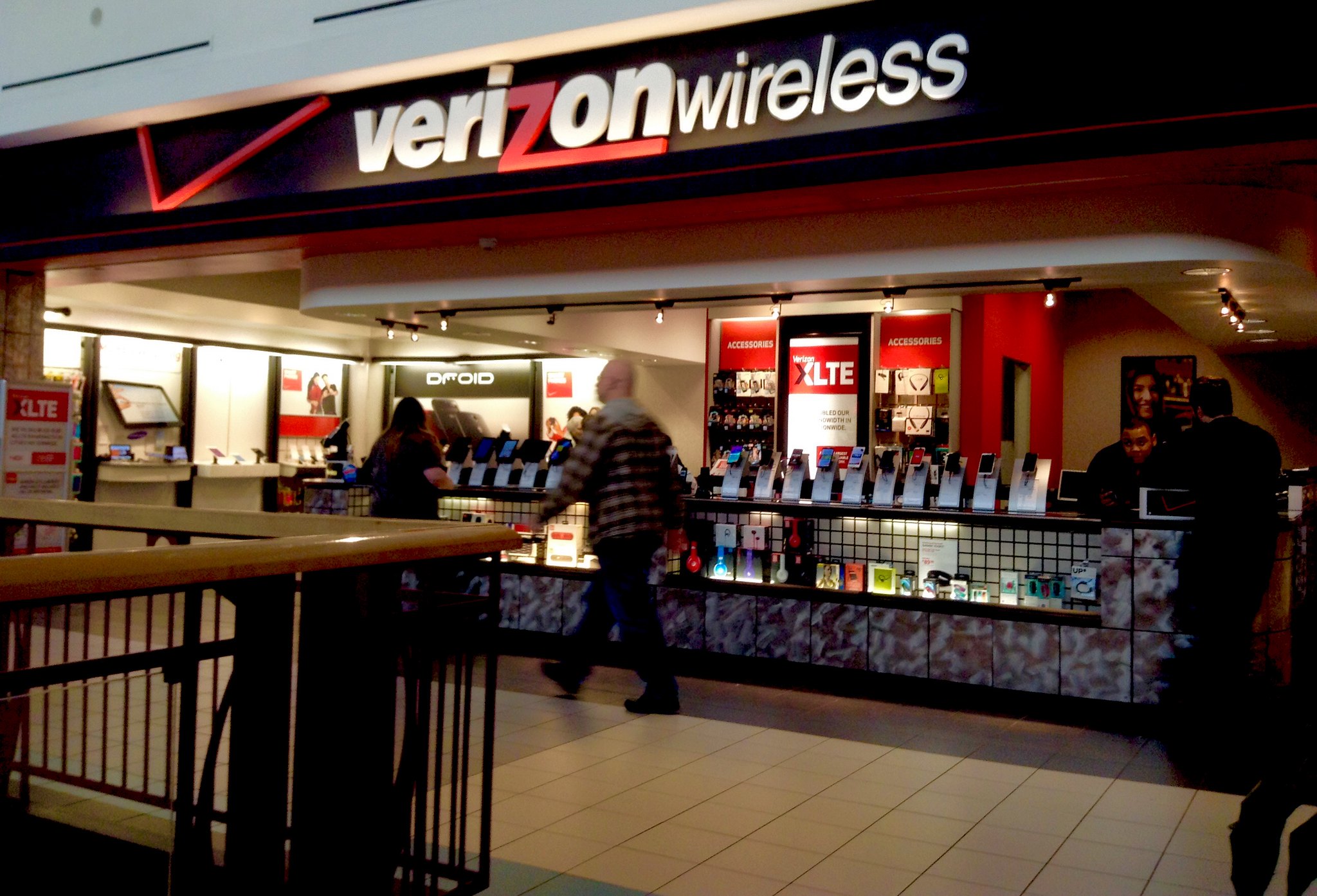
The massive service disruption experienced by Verizon in January 2026 may represent the most significant mobile network outage in the United States during the 2020s. To understand its true scale, it is key to consider what wireless network specialists point out: these events are not isolated exceptions, and no AT&T or T-Mobile user is exempt from facing similar situations in the future.
Octavio García, an analyst at Forrester and an expert with extensive experience in the telecommunications sector, explains that expecting a contemporary mobile network to operate with absolute availability, comparable to basic services like water or electricity, “is not viable in practical terms.” The complex infrastructure supporting these networks—composed of communication towers, satellites, and software systems—”is not exempt from unexpected outages due to multiple factors.”
Nevertheless, analysts agree that the Verizon incident was particularly severe. Its impact goes beyond the evident blockage of a still undetermined number of emergency 911 calls.
The only event comparable in gravity during this decade was the major failure that affected AT&T in February 2024. That outage, which also lasted approximately eleven hours, prevented 92 million calls from being completed, including 25,000 intended for emergency services.
“This Verizon failure appears to be more critical,” observes Alex Besen, CEO of The Besen Group and a veteran with three decades of experience in the mobile data field. “In 2024, many AT&T customers maintained intermittent access to data and text messages… In contrast, this outage simultaneously eliminated both voice and data, leaving devices stuck in SOS mode.”
A Structural Failure Rather Than an Operational Error
While the AT&T outage in 2024 was ultimately attributed to an employee executing a misconfigured network update, the Verizon case reflects, according to Besen, “a more fundamental core failure.” It was a software problem that completely caught the company off guard, to the point that Verizon took hours to officially identify the technical origin of the collapse.
To establish a definitive comparison between both events, it will be necessary to await the results of a thorough investigation into what happened with Verizon. The potential influence of the largest round of layoffs in the company’s history, carried out in November 2025—which included at least one Network Engineering project director—on this scenario will also need to be assessed. It is plausible that among those 13,000 laid-off employees, key institutional knowledge to prevent or contain a failure of this nature was lost.
Data collected by Downdetector—a platform where users report service disruptions—suggests that the Verizon incident surpassed the AT&T one in magnitude. During the 2024 event, simultaneous reports of AT&T issues peaked at 74,000, beginning to decline around 9:00 a.m. Eastern Time.
In contrast, on January 14, 2026, simultaneous reports from Verizon customers reached 178,000, with a peak coinciding with the busiest time on the East Coast, at 12:45 p.m.
Operational and Reputational Consequences
For Verizon, the SOS mode displayed on devices proved to be a raw and foreboding symbol. While many affected customers question whether a $20 compensation is adequate, others are considering canceling their contracts entirely. In this context, SOS could also be interpreted as “Save Our Operations.”
“Verizon will face a significant impact on its reputation and a potential customer exodus,” García told Mashable. “These effects are anticipated to extend over the first six to nine months following the outage.”
A strategy that could mitigate this attrition would be implementing a guarantee similar to the one introduced by AT&T in January 2025—almost a year after its own crisis—the first of its kind in the industry. This commitment automatically offers a full day of free service if the wireless connection remains inactive for an hour or more.
Meanwhile, Verizon and its competitors are watching to see how extensive user migration will be. Even a reduction in the customer base—which theoretically would relieve pressure on the network—does not represent a favorable scenario for the company.
“The loss of subscribers would undoubtedly negatively affect Verizon in the short term, even if it slightly reduces strain on its infrastructure,” Besen concludes.
By: Nestor Castillo, ForAllTechNews Director
Image credit: Flickr / CC BY 4.0 / Attribution 4.0 International